
Views: 0 Author: Site Editor Publish Time: 2025-10-23 Origin: Site


The Auto Transmission Friction Plate is a critical element in all modern drivetrains. It transmits engine torque to the transmission, ensures smooth engagement, and protects the system from excessive wear. Its material, structure, and thermal performance determine reliability and efficiency across different transmission types. Understanding friction plate design, operating principles, and applications is essential for engineering, manufacturing, and B2B decision-making. This article analyzes the role of friction plates in manual, automatic, dual-clutch, CVT, and semi-automatic transmissions, highlighting design considerations, performance parameters, and maintenance recommendations.

In a manual transmission, the friction plate is positioned between the flywheel and the pressure plate, forming the core component for torque transfer. When the driver releases the clutch pedal, the Auto Transmission Friction Plate is pressed against the flywheel by a diaphragm or coil spring, transmitting engine torque efficiently while allowing smooth engagement. Friction linings are commonly made from organic composites, Kevlar, or ceramics, providing consistent friction under high temperatures and resisting wear. Uneven pressure distribution or spring fatigue can result in clutch slippage, vibration, or difficult engagement. Manual friction plates are typically single-plate designs, optimized for driver control, heat tolerance, and low wear rates.
Modern design innovations focus on reducing the weight of the pressure plate, improving material thermal stability, and ensuring uniform contact with the flywheel. Optimizing friction coefficient, spring stiffness, and plate geometry ensures predictable pedal feel and long-lasting performance. Engineering considerations also include torque capacity, rotational speed, and clutch engagement smoothness. The friction plate must endure high-cycle engagement without excessive heat buildup, which requires careful material selection and surface treatment. Automotive sources such as AutoLintec and TT Transmission emphasize that proper design and material quality can extend service life to over 100,000 km under normal driving conditions.
Tip:
B2B buyers should verify friction coefficient stability across 100–250°C and ensure consistent spring pressure to maintain engagement smoothness over the vehicle lifespan.
In automatic transmissions, multiple Auto Transmission Friction Plates are arranged in clutch packs, alternating with steel separator plates. These packs are compressed hydraulically to lock specific planetary gear sets, enabling smooth automatic gear shifts without driver intervention. Friction linings are often paper-based or carbon-reinforced composites, designed for durability and stable torque transfer under repeated engagement and fluid immersion. Transmission fluid plays a dual role: as a lubricant and hydraulic medium for clutch actuation.
Automatic friction plates must maintain consistent engagement under varying oil temperatures, pressure fluctuations, and load conditions. Tight manufacturing tolerances—usually ±0.02 mm for thickness—are crucial to prevent slippage or delayed response. Excessive slipping can generate heat that accelerates material wear or degrades transmission fluid, affecting performance and efficiency. System designers also account for piston engagement uniformity, friction plate alignment, and thermal dissipation. Effective cooling ensures long-term reliability even under high-torque applications. Multi-plate automatic friction assemblies are therefore highly engineered components, where material properties, hydraulic control, and fluid compatibility are all critical factors.
Table – Automatic Transmission Clutch Pack Components
Component | Function | Material |
Friction plate | Torque transfer | Paper-based / carbon composite |
Steel plate | Structural rigidity | Hardened steel |
Piston | Clutch actuation | Aluminum alloy |
Separator spring | Return mechanism | Stainless steel |
Note:
B2B manufacturers should ensure friction plates pass wet friction durability tests to confirm long-term performance in oil-immersed conditions.
A dual-clutch transmission (DCT) uses two independent sets of Auto Transmission Friction Plates: one controlling odd-numbered gears and one for even-numbered gears. This configuration enables near-seamless torque transfer, reducing shift interruption and improving acceleration and drivability. DCT friction plates are commonly wet clutches immersed in transmission fluid, which manages heat, minimizes wear, and allows higher torque capacity. Materials such as carbon composites or sintered metals withstand repeated engagement cycles and temperatures up to 400°C.
Precise hydraulic control, consistent plate thickness, and uniform cooling are essential to prevent shift shock or premature wear. DCT clutch packs may include 10–12 plates per clutch, each requiring exact alignment for high-speed engagement. Wet DCTs also demand careful fluid selection, as viscosity and thermal stability directly affect engagement smoothness. Proper design ensures reliable operation even in high-performance or heavy-load conditions. Advanced DCT systems also monitor engagement force and temperature to optimize longevity and reduce energy loss. Manufacturers focus on durability, heat dissipation, and friction coefficient stability, since even minor deviations can impact fuel efficiency and customer satisfaction.
Comparison – Wet vs. Dry DCT
Type | Cooling | Maintenance | Efficiency | Typical Use |
Dry DCT | Air | Low | High | Compact cars |
Wet DCT | Oil | Medium | Slightly lower | High-performance vehicles |
Tip:
Verify μ–T curve testing under wet conditions for DCT friction plates to ensure high-frequency engagement reliability and consistent torque transfer.
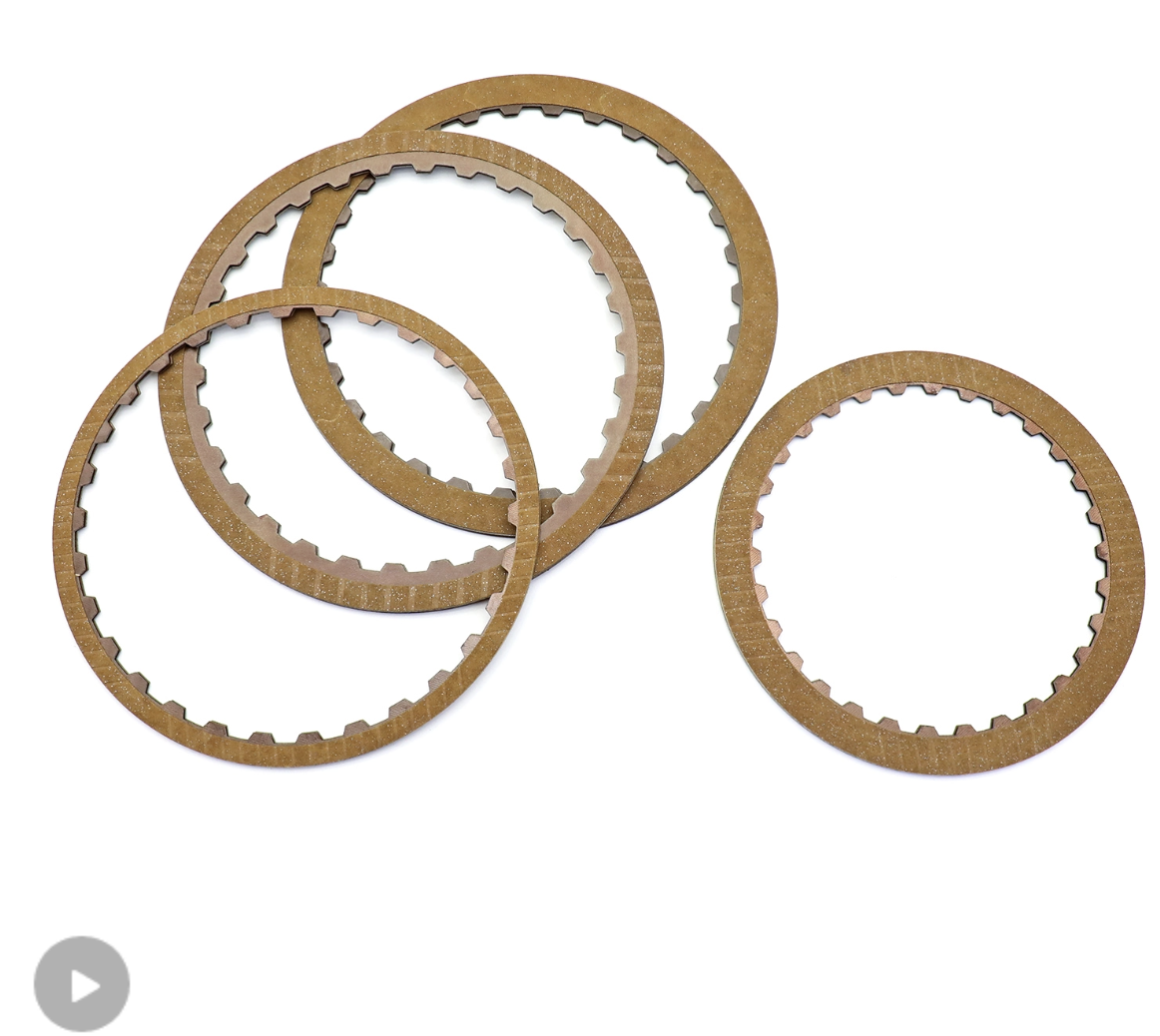
Unlike manual transmissions, automatic transmissions generally do not use a traditional pressure plate like those found in friction clutches. Instead, automatic systems rely on a torque converter to connect and disconnect the engine from the transmission. The torque converter uses fluid coupling to allow the engine to keep running while the vehicle is stopped, eliminating the need for a clutch pedal and pressure plate.
However, automatic transmissions still use clutch packs that serve a similar purpose to pressure plates. These clutch packs consist of multiple friction discs and steel plates stacked alternately inside a drum. When engaged, hydraulic pressure squeezes the clutch pack together, locking the plates and transmitting engine power to the transmission gears.
Clutch packs in automatic transmissions function as the main components that engage and disengage the planetary gear sets to change gears smoothly. Hydraulic pressure, controlled by the transmission’s valve body, activates pistons that press the clutch pack plates together. This pressure creates friction, allowing power transfer through the transmission.
While these clutch packs don’t have a separate pressure plate like manual clutches, the piston that compresses the plates acts similarly. It applies the necessary clamping force to hold the friction discs tightly and transmit torque without slipping.
Key roles of clutch packs and their pressure-like components in automatic transmissions include:
Power Transfer: They lock gear sets to transmit engine power to the wheels during acceleration.
Smooth Gear Shifts: By engaging and disengaging gradually, they enable seamless shifting without driver input.
Heat Management: The friction surfaces and hydraulic fluid help dissipate heat generated during operation.
Durability: Designed to withstand frequent engagement cycles, ensuring reliable performance over time.
In essence, while automatic transmissions lack a traditional pressure plate, the clutch packs and their pistons fulfill the clamping and power transfer roles required for smooth, automatic gear changes.
Tip: Regularly check automatic transmission fluid levels and condition to ensure clutch packs operate efficiently and prevent premature wear in automatic systems.
Proper maintenance of the pressure plate is essential for a healthy clutch system and smooth vehicle operation. Regular checks and timely care help avoid costly repairs and extend the life of your clutch components.
Visual Inspection: During clutch servicing, visually inspect the pressure plate for signs of wear, cracks, or warping. Any uneven surfaces or damage can affect clutch performance.
Check Clamping Force: A pressure plate must maintain adequate clamping force to hold the clutch disc firmly. Technicians can measure this force using specialized tools during service.
Monitor Clutch Pedal Feel: Changes in pedal stiffness or unusual pedal travel may indicate pressure plate issues. Pay attention to these signs to catch problems early.
Inspect Related Components: The pressure plate works closely with the clutch disc and release bearing. Check these parts simultaneously to ensure balanced wear and proper function.
Cleanliness: Keep the clutch assembly free from oil, grease, or dirt, which can reduce friction and cause slipping.
Avoid Riding the Clutch: Keep your foot off the clutch pedal when not shifting. Riding the clutch causes continuous pressure on the pressure plate, leading to premature wear.
Smooth Engagement: Release the clutch pedal gently to avoid sudden shocks that stress the pressure plate springs and metal parts.
Timely Repairs: Address clutch slipping or difficulty shifting promptly. Ignoring these symptoms can accelerate pressure plate damage.
Quality Replacement Parts: When replacing the pressure plate, use high-quality OEM or reputable aftermarket components. This ensures durability and reliable performance.
Balanced Component Replacement: Replace the pressure plate, clutch disc, and release bearing as a set. This balanced approach prevents uneven wear and improves clutch life.
Persistent Clutch Slipping: If the clutch slips even after adjustment, the pressure plate may have lost its clamping force.
Warped or Cracked Plate: Any visible warping or cracks require immediate replacement to avoid clutch failure.
Weak or Broken Springs: Springs inside the pressure plate that are broken or weakened cannot maintain proper pressure.
Excessive Pedal Effort or Sponginess: Unusual pedal feel often signals pressure plate or related component wear.
Burnt Smell or Vibration: These symptoms during clutch engagement typically indicate pressure plate overheating or uneven pressure.
Replacing the pressure plate at the right time ensures smooth power transfer and prevents damage to other transmission parts. Always consult a professional technician for diagnosis and service.
Tip: Schedule clutch system inspections during routine vehicle maintenance to catch pressure plate issues early and maintain optimal clutch performance.
Pressure plates are crucial in friction clutches, ensuring smooth power transfer and efficient gear shifts. Maintaining a healthy clutch system is vital for vehicle performance and longevity. Regular inspections and timely repairs prevent costly damage. Gearstar offers quality clutch components that enhance vehicle performance and reliability. Their products ensure optimal pressure plate function, providing drivers with smooth and efficient power transfer.
A: The Auto Transmission Friction Plate, often referred to as the clutch disc, is crucial for transferring engine power to the transmission by engaging with the flywheel and pressure plate.
A: The pressure plate applies clamping force on the Auto Transmission Friction Plate, pressing it against the flywheel to ensure smooth power transfer from the engine to the transmission.
A: Proper maintenance of the pressure plate ensures consistent clamping force, preventing slippage and uneven wear on the Auto Transmission Friction Plate, thus extending its lifespan.
A: Common issues include slipping, difficulty shifting gears, and unusual clutch pedal feel, often caused by wear, overheating, or improper installation of the pressure plate affecting the Auto Transmission Friction Plate.


